

The Quantum-Safe Sentinel #10 – July 2026
🏛️ This month, governments moved from advice to obligation. The US signed a pair of quantum executive orders, one to build the technology, one to defend against it, while new field data showed how far most systems still are from ready.
🛡️ In PQC, the deadlines are multiplying. A national agency, a financial regulator, a hyperscaler, and a standards body all set quantum clocks, and they are converging faster than many expected.
⚛️ In quantum communications, we look at a free platform for learning quantum security hands-on, a new experimental defense for QKD, and a European move to certify quantum-safe networks.
➡️ Our Awareness Topic goes deep on that QKD defense: how detection-efficiency-mismatch attacks work, and why a simple four-state countermeasure deserves to become standard.

The Quantum-Safe Sentinel #9 – June 2026
🗞️ In this June issue:
🏭 𝗤𝘂𝗮𝗻𝘁𝘂𝗺 𝗵𝗮𝗿𝗱𝘄𝗮𝗿𝗲 𝗶𝘀 𝗶𝗻𝗱𝘂𝘀𝘁𝗿𝗶𝗮𝗹𝗶𝘇𝗶𝗻𝗴.
🛡️ 𝗣𝗤𝗖 𝘀𝘁𝗮𝗻𝗱𝗮𝗿𝗱𝘀 𝗮𝗻𝗱 𝗺𝗶𝗴𝗿𝗮𝘁𝗶𝗼𝗻 𝘁𝗼𝗼𝗹𝗶𝗻𝗴 𝗺𝗮𝘁𝘂𝗿𝗲.
⚛️ 𝗤𝗞𝗗 𝗴𝗼𝗲𝘀 𝗻𝗮𝘁𝗶𝗼𝗻𝗮𝗹, 𝗰𝗼𝗺𝗺𝗲𝗿𝗰𝗶𝗮𝗹, 𝗮𝗻𝗱 𝗳𝗮𝘀𝘁𝗲𝗿. From Qatar to Malta to Sweden, deployments are leaving the lab.
💡 𝗔𝘄𝗮𝗿𝗲𝗻𝗲𝘀𝘀 𝗧𝗼𝗽𝗶𝗰: How to read a quantum hardware roadmap without being misled.
⚡ 𝘚𝘵𝘢𝘺 𝘪𝘯𝘧𝘰𝘳𝘮𝘦𝘥. 𝘚𝘵𝘢𝘺 𝘢𝘩𝘦𝘢𝘥. 𝘚𝘵𝘢𝘺 𝘲𝘶𝘢𝘯𝘵𝘶𝘮-𝘴𝘢𝘧𝘦. ⚡

The Quantum-Safe Sentinel #8 – May 2026
🕰 𝗧𝗵𝗲 𝗤𝘂𝗮𝗻𝘁𝘂𝗺 𝗖𝗹𝗼𝗰𝗸 𝗶𝘀 𝘁𝗶𝗰𝗸𝗶𝗻𝗴 𝗳𝗮𝘀𝘁𝗲𝗿. A landmark G7 central bank report, a Harvard institute warning, and a digital asset threat assessment: three independent sources, one shared urgency.
🛡 𝗣𝗤𝗖 𝗺𝗼𝘃𝗲𝘀 𝗳𝗿𝗼𝗺 𝗽𝗶𝗹𝗼𝘁 𝘁𝗼 𝗽𝗿𝗼𝗱𝘂𝗰𝘁𝗶𝗼𝗻. Meta publishes its migration playbook. South Korea deploys across five critical sectors at once. These are operational commitments, not experiments.
⚛️ 𝗧𝗵𝗲 𝗾𝘂𝗮𝗻𝘁𝘂𝗺 𝗶𝗻𝘁𝗲𝗿𝗻𝗲𝘁 𝘁𝗮𝗸𝗲𝘀 𝘀𝗵𝗮𝗽𝗲. A commercial QKD corridor in Florida, the first quantum teleportation between independent quantum dot emitters, and a 120 km fiber QKD milestone: three advances sketching tomorrow's architecture.
💡 This month's Awareness Topic: 𝗛𝘆𝗯𝗿𝗶𝗱 𝗖𝗿𝘆𝗽𝘁𝗼𝗴𝗿𝗮𝗽𝗵𝘆. Mixing classical and PQC cryptography is the recommended transition posture for now!
Towards a Field-Informed Risk-Based Framework for PQC Migration in Legacy Systems
Ongoing advances in quantum computing represent a growing risk to modern cryptography (potentially threatening both asymmetric and symmetric encryption protocols), thereby challenging the foundations of digital security. In response, global cybersecurity communities, led by standardization bodies such as NIST and ETSI, launched initiatives to establish migration pathways toward post-quantum cryptography (PQC). However, the migration of legacy systems to quantum-safe cryptography presents many challenges that have not yet been addressed due to their limited cryptographic agility, outdated infrastructure, and regulatory constraints.

The Quantum-Safe Sentinel #7 – April 2026
🏴☠️This month, we see how the quantum threat landscape is massively transforming due to theoretic advances on the algorithmic side and error correction to implement Shor’s algorithm.
🛡️ On the PQC front, 2029 is now the date to plan for, both Google and Cloudflare are committing to full migration by then.
⚛️ Regarding Quantum Cryptography and QKD, we’ll see that initiatives are becoming global while researchers in Warsaw found a brilliantly simple new approach using 200-year-old optics.
➡️ Awareness Topic of the Month We focus on Quantum Risk Governance: how to bring quantum risk into your board-level risk framework.

QS LENS #4: The Signature Gap
With the August 2024 NIST finalisation of ML-KEM, and its rapid adoption across browsers, servers, and VPN infrastructure, many organisations can now point to real PQC deployments. The encryption layer is moving. The threat of "harvest now, decrypt later" attacks — where adversaries collect today's traffic to decrypt once a quantum computer exists — is being addressed. But there is a second migration that has barely started, and its absence leaves organisations in a state that might be described as half-quantum-safe: protected against future decryption, but still fully vulnerable to future forgery. That second migration is the signature migration. And unlike key encapsulation, it does not fit into a single well-defined slot. It is embedded across the entire infrastructure stack — in certificate chains, firmware images, code-signing pipelines, identity tokens, and legal documents. It touches every team. It requires years of sequenced planning. And it carries consequences that a failed KEM migration does not: a forged signature can impersonate a server, deliver malicious firmware as legitimate, or fabricate credentials across an entire authentication surface.This issue of QS Lens examines why the signature migration has fallen behind, where the exposure actually lives, and what a structured response looks like for CISOs who want to close the gap before the threat becomes active.

The Quantum-Safe Sentinel #6 – March 2026
🏴☠️This month, regarding the quantum threat, we’ll talk about a new algorithm that may widely overtake Shor’s. While the news remains unreliable, the risk of sudden progress in that field has to be kept in mind.
🛡️PQC reaches a key inflection point, but while breakthroughs are important, there are still blind spots to address.
⚛️ Regarding Quantum Cryptography and QKD, we’ll see that initiatives are becoming global and opening a new era in this field.
➡️ Awareness Topic of the Month — We focus on HSMs and PKI, now emerging as some of the most critical cryptographic assets at risk. This edition introduces a Quantum Exposure Map to help identify and prioritize these vulnerabilities.
Bitcoin face à la menace quantique : panique exagérée ou vrai risque systémique ?
La sécurité de Bitcoin repose sur plusieurs briques cryptographiques distinctes, dont certaines résistent bien au quantique, tandis qu’une en particulier – le schéma de signature elliptique (ECDSA/Schnorr) – est vulnérable à l’algorithme de Shor. Dans ce contexte, deux visions s’opposent : pour les uns, la menace est sérieuse mais maîtrisable ; pour les autres, elle pourrait déstabiliser profondément l’écosystème si elle est sous‑estimée.

The Quantum-Safe Sentinel #5 - February 2025
💶 This month, we look at the cost of ignoring the quantum threat.
🛡️We’ll examine how PQC adoption is progressing anyway, driven by regulators, standards bodies, and early deployments.
⚛️ And we’ll review recent advances in quantum cryptography that show the ecosystem is maturing faster than many assume.
➡️ Our awareness topic focuses on the cryptographic inventory - the boring, uncomfortable, but absolutely unavoidable starting point of any serious PQC transition.
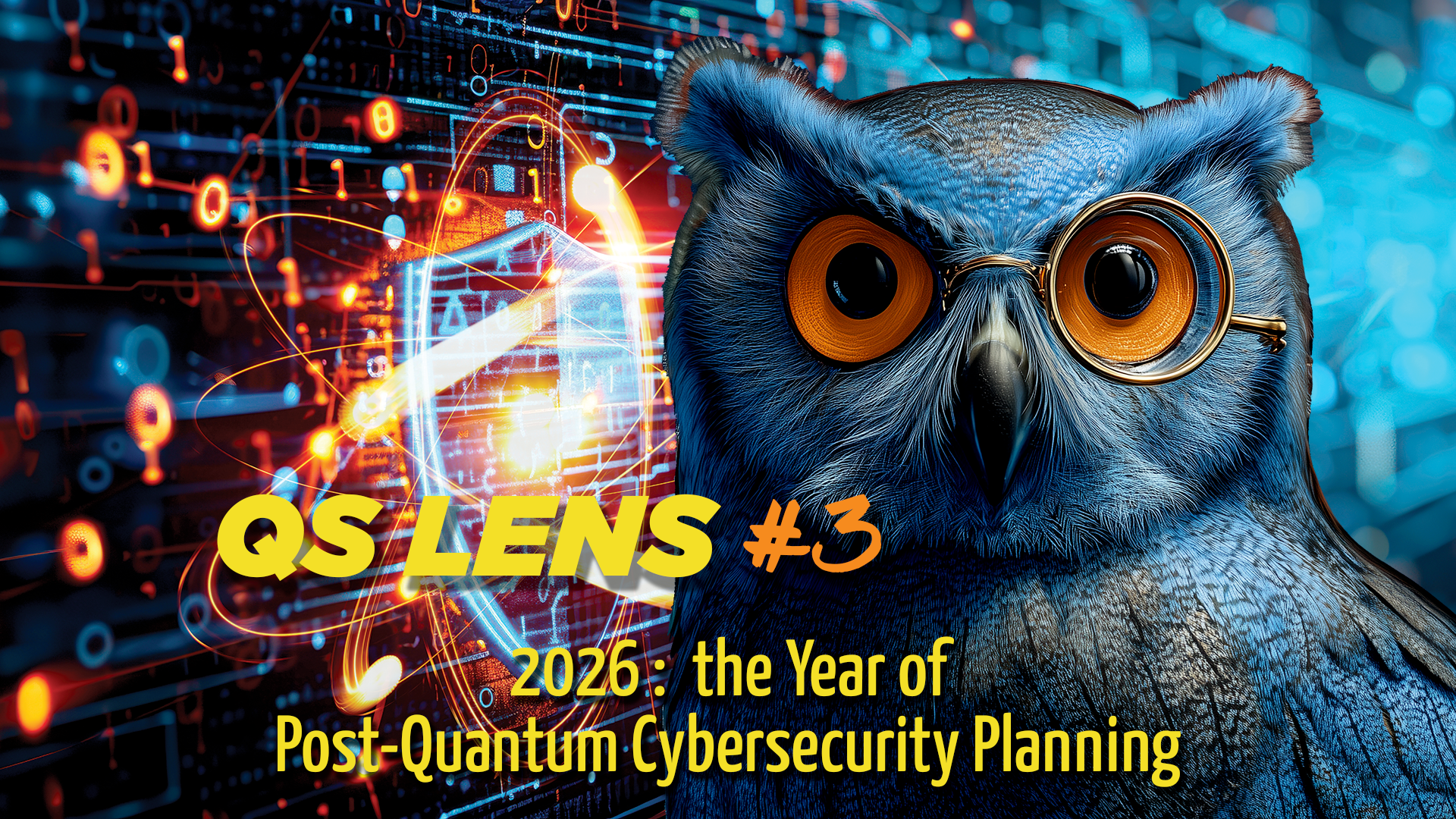
2026, the year of Post-Quantum Cybersecurity Planning
In our last newsletter, we highlighted a critical shift in the quantum cyber threat landscape: governments, industry leaders, and standards bodies are converging on concrete PQC implementation schedules. This edition of QS Lens provides a deep dive into that news to provide clear elements on why 2026 is the definitive turning point year for planning your migration to Post-Quantum Cryptography (PQC).
In this article, we outline the positions of key global stakeholders on the timeline for PQC adoption, then explain the fundamentals required to initiate a PQC transformation, before providing CISOs with a practical to-do list for 2026.

The Quantum-Safe Sentinel #4 - January 2026
We said it last month, and we will repeat it all year long: 👉🏽 2026 must be the year of Quantum Cybersecurity Planning. No more delays. Leading CISOs and CIOs who want to be ready on time must start planning their transition now.
Quantique & Cybersécurité : le Livre Blanc
Les technologies quantiques ne relèvent plus de la prospective lointaine. Leur montée en maturité, combinée à l’évolution rapide des cadres réglementaires, impose aujourd’hui aux organisations de structurer une vision claire des risques et des opportunités associés.
À l’occasion du Colloque 2025 du Forum des Compétences “Quantique et Cybersécurité”, QuRISK a contribué aux travaux collectifs et propose, dans cet article, une synthèse des enseignements-clés.
📩 RDV à la fin de l'article pour télécharger le Livre Blanc.

The Quantum-Safe Sentinel #3 - December 2025
As we close out 2025, this month brings a mix of progress and persistent challenges: successful tests of PQC in critical payment systems, alarming delay in enterprise adoption, and continued evolution of quantum cryptography technologies.
As always, we conclude with a focused awareness topic. This month, we address The Enterprise Readiness Gap, examining why organizations remain unprepared despite growing awareness.
A Guide to Quantum Security Concepts
As quantum computing advances toward practical reality, the cybersecurity landscape is undergoing a fundamental transition for “quantum-proofing”. Yet confusion persists around the terminology that defines this transition. If you've found yourself puzzled by terms like PQC, QKD, or "quantum-safe", you're not alone.
Let’s clarify these critical concepts that will shape the future of digital security.

The Quantum-Safe Sentinel #2
Welcome to the second edition of our Quantum-Safe bulletin. Last month’s inaugural version received exceptional interest, and we want to thank all of you for your feedback and engagement. It reinforced a belief we hold strongly: awareness and continuous learning are essential foundations for achieving cyber resilience.

The Quantum Talent Gap
Most people start to understand that Quantum Technologies will be the next game changer after AI. However, few realize the challenges created by the shortage of quantum-trained professionals, and how this will impact IT, cybersecurity, and business in general.

The Quantum Threat looms over Banking
A Europol-led initiative, the Quantum Safe Financial Forum, has sounded the alarm for Europe’s banks and financial institutions: the time to prepare for quantum risk is now.

The Quantum-Safe Sentinel #1
Welcome to the inaugural issue of QuRISK’s monthly bulletin, launched in celebration of Cybersecurity Awareness Month.
This new series is dedicated to shedding light on the rapidly evolving quantum cyber threat landscape and the emerging quantum-safe solutions: from Post-Quantum Cryptography (PQC) to Quantum Key Distribution (QKD) and beyond.
Each month, QuRISK will bring you a curated selection of insights, including key awareness points, the latest industry news and regulatory updates, and a spotlight feature on a timely quantum security topic.
5 Steps to Crypto-Agility Before PQC Implementation
Quantum computing is no longer a distant concern. With the European roadmap setting 2030 as the deadline for transitioning high-risk systems to Post-Quantum Cryptography (PQC), organizations need to act now. It's time for all CISOs to proactively address the "quantum shift" and consider a structured, long-term response. Let's explore the possible solutions and understand why crypto-agility is, without a doubt, the mandatory prerequisite, before detailing the steps to becoming a crypto-agile organization.
QKD standards: from Theory to Practice
In this article, we expose how QuRISK, as a risk company specialized in emerging technologies, is tackling the QKD security standardization subject. We will delve deeper into what these standards cover.
This article is a first result of a collaboration with EPITA’s Quantum Major students and VeriQloud - a leading French company in Quantum Communication - that offers cutting-edge QKD systems. The goal of our project is to propose innovative and efficient methods for analyzing and practically testing the compliance of QKD systems.